What Are Arrow Functions?
Arrow functions (introduced in ES6) are like the "express lane" of JavaScript functions. They provide:
-
Shorter syntax (like a condensed function declaration)
-
No binding of this (they inherit context like a child inherits eye color)
-
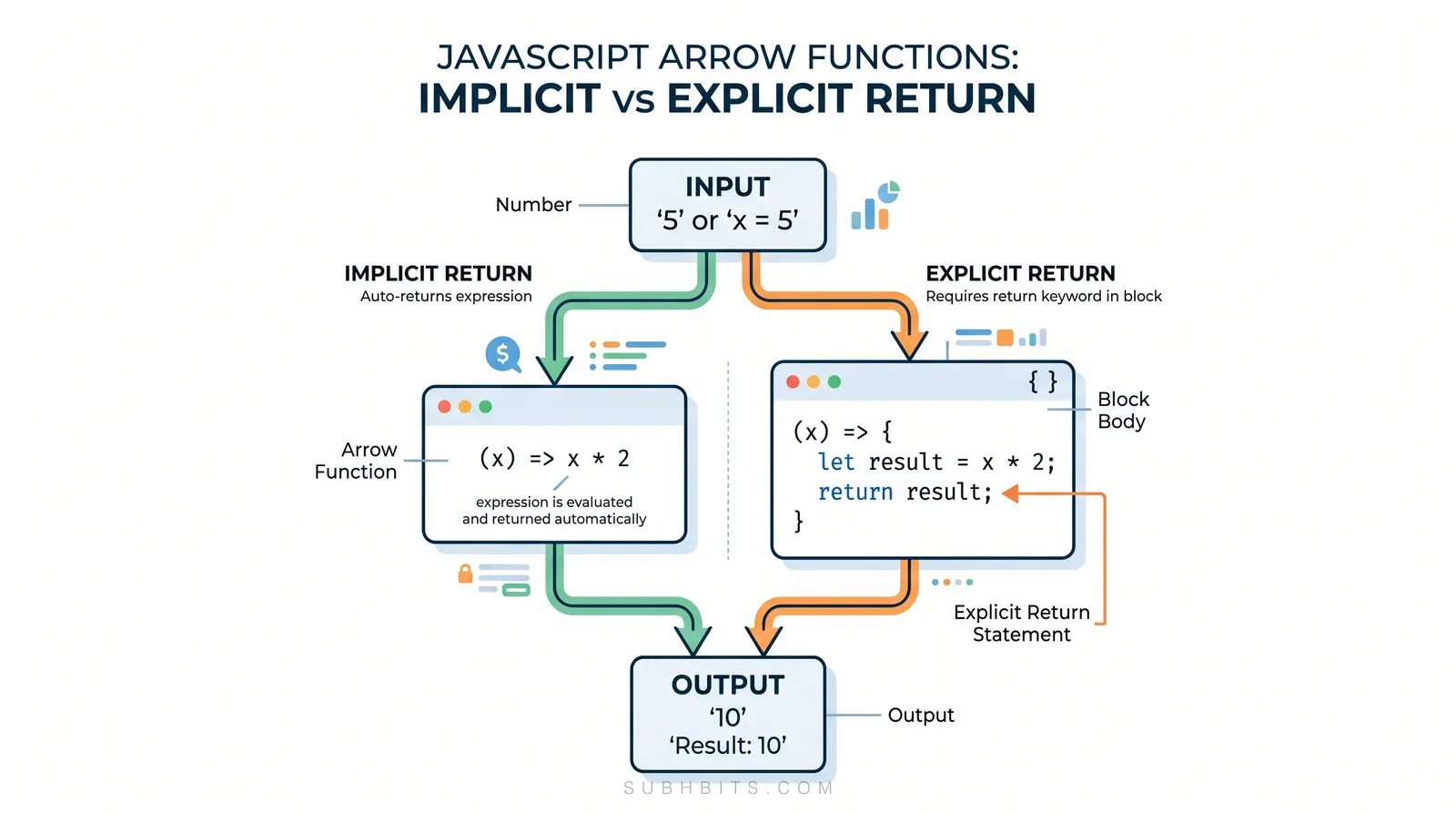
Implicit returns for single expressions (automatic value delivery)
Traditional Function vs. Arrow Function Analogy
Imagine ordering coffee:
Regular function: "I'd like a coffee, please wait while I brew it, then return it to you."
Arrow function: "Coffee, black." (direct and concise)
Function Types in JavaScript: Quick Refresher
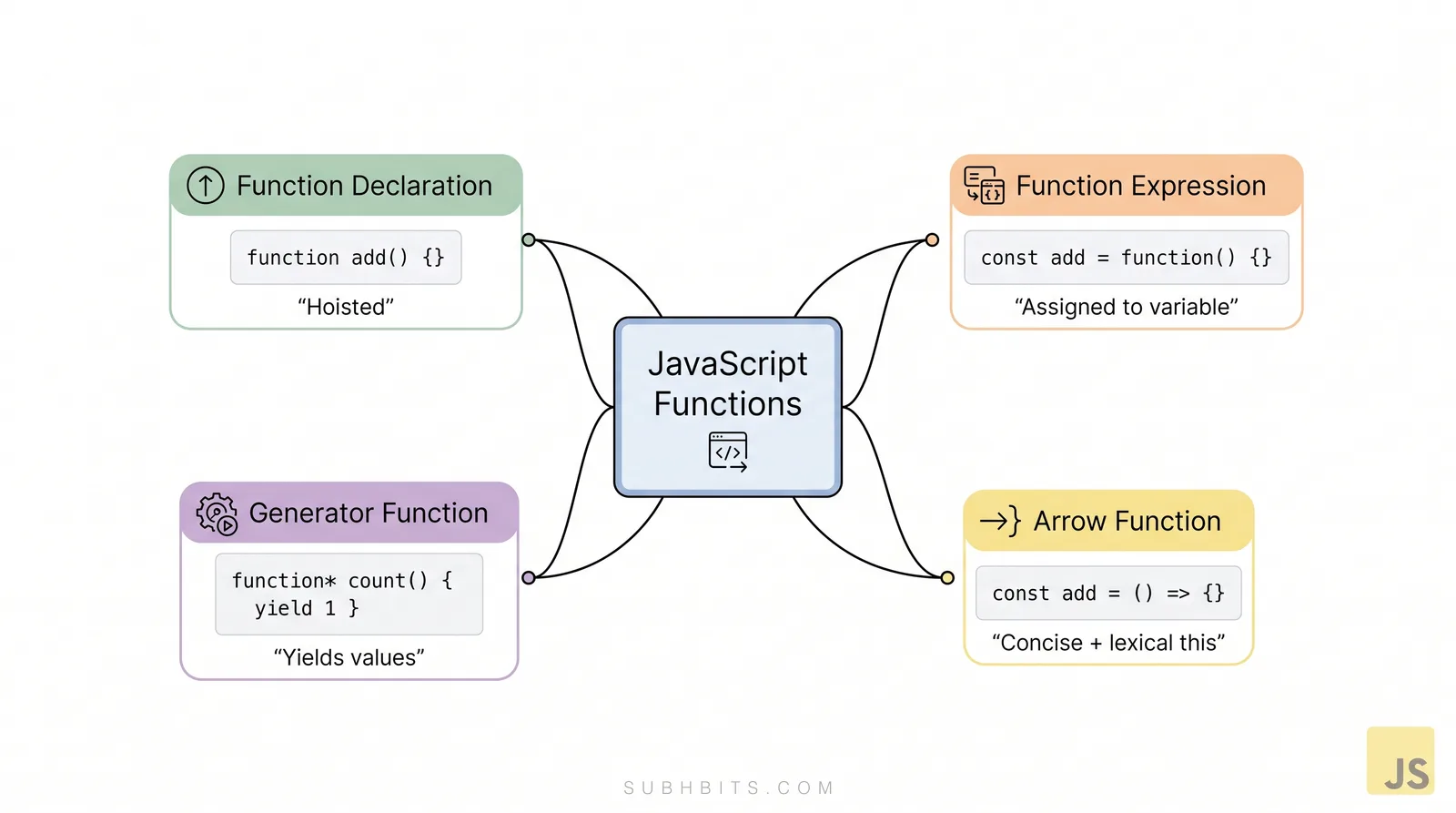
1. Function Declarations (Hoisted) Function declarations (Hoisted) are a way to define functions in JavaScript that are hoisted, meaning they can be called before they are defined in the code. This happens because the JavaScript engine moves the function declarations to the top of their containing scope during the compilation phase.
function add(x, y) {
  return x + y;
}
2. Function Expressions (Not Hoisted) Function expressions are another way to define functions in JavaScript. Unlike function declarations, function expressions are not hoisted, meaning they cannot be called before they are defined in the code.
const subtract = function (x, y) {
  return x - y;
};
3. Generator Functions (Yield Multiple Values) These functions can yield
multiple values, allowing you to pause and resume their execution. They are
defined using the function* syntax and the yield keyword.
function* countTo3() {
  yield 1;
  yield 2;
  yield 3;
}
4. Arrow Functions (Concise Syntax) Arrow functions are a more concise way
to write functions in JavaScript. They are defined using the => syntax and
have implicit returns for single expressions.
const multiply = (x, y) => x * y;Arrow Function Syntax Deep Dive
This section provides an in-depth look at the syntax of arrow functions in JavaScript, highlighting their concise and direct nature compared to traditional functions.